
Figure 4: Wound Care and Medication Supplies
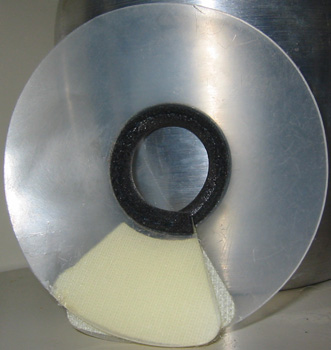 |
Elizabethan collar to prevent self-inflicted injuries. Use only as a last resort, or when absolutely necessary to prevent further injury.
See also: Make Your Own Elizabethan Collars |
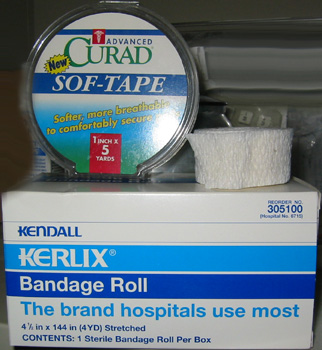 |
Tape and bandages These are good for the obvious but also good in lieu of Elizabethan collar. For example, you can wrap a “shirt” around a rat’s chest to reduce flexibility. The white self-stick bandage on the right does a very good job of sticking to itself without sticking to the rat. The curad soft-tape – while efforts are made not to ever apply directly on the fur or skin of the rat, in some cases this may be necessary to prevent the rat from removing the wrap. Care must be taken when removing the tape from the fur if this done. The Kerlix bandage rolls are great because it takes them longer to chew through it. |
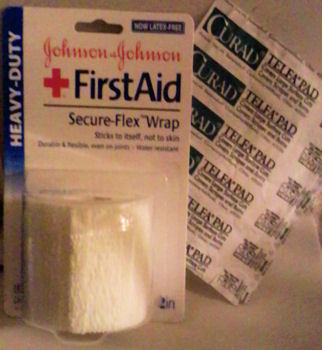 |
Types of bandages in addition to above The white bandage on the left is also an example of a self-stick wrap. Johnson & Johnson Secure-Flex TM wrap is the brand shown here. An equivalent brand is Vetrap TM. The Curad Telfa pad, shown on the right is a non-stick pad that can be placed directly over a wound and underneath a self-stick outer wrap. See also: “How To Do A Post-Op Bandage with Anchor Tapes on a Rat” by Lindsay Pulman, LVT. |
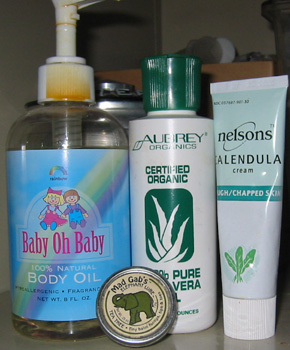 |
For dry skin, scabs, sores, burns. Left to right: Baby oil, aloe vera, calendula cream, balm with tea tree oil. |
|
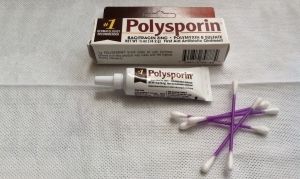
Polysporin a topical antibiotic ointment (that does not contain neomycin) used for treating small wounds after cleansing. |
 |
Syringes for feeding and medicating. From top to bottom:
12 cc feeding syringe (also can be used with needle to administer sub q fluids), the following syringe, seen in its case, is the same size. |
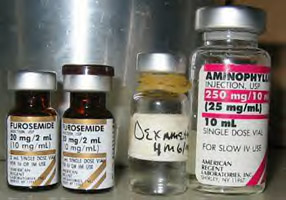 |
From left to right: furosemide (Lasix) for injection, dexamethasone for injection, aminophylline for injection. Check the Rat Medication Guide regarding medications listed here and their use. |
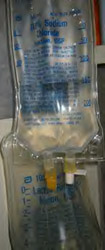 |
Lactated Ringer’s Solution and Saline. Check the Rat Medication Guide regarding solution listed here and its use. |
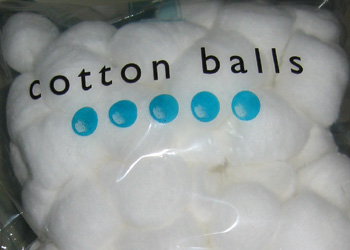 |
Cotton balls. |
 |
Styptic for stopping minor bleeding such as in clipping toenails too short. |
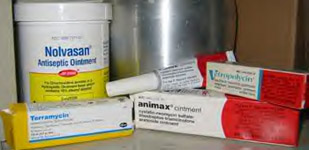 |
Salves Left to right: Nolvasan (topical), Terramycin (ophthalmic), Animax (tube and box below – topical), Vetropolycin (ophthalmic) |
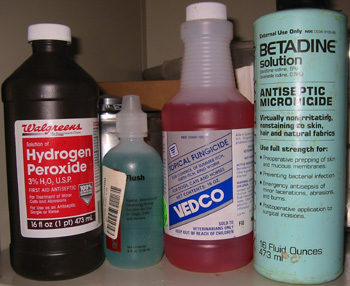 |
Cleaning agents: Left to right: Hydrogen peroxide, Chlorahexaderm flush, topical fungicide, Betadine. Vets state do not ever use rubbing alcohol on a rat’s skin. |
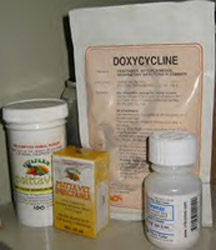 |
Antibiotics: From left to right: Water soluble doxycycline, injectable doxycycline . Zithromax (antibiotic), children’s cherry flavored. (Baytril not shown). Check the Rat Medication Guide regarding medications listed here and their use. |
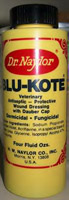 |
Blu-Kote, with drying properties, is primarily used for ulcerative pododermatitis (bumble foot). It can also be used in many cases of moist dermatitis. |
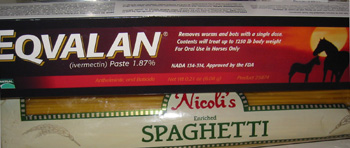 |
Ivermectin oral paste shown here is good for most parasitic needs. Check the Rat Medication Guide regarding medication listed here and its use. |
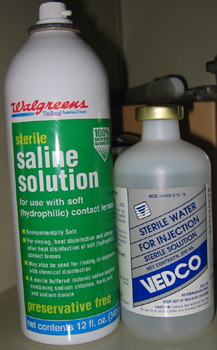 |
Left to right: Saline for eye flushing, sterile water for abscess flushing. |
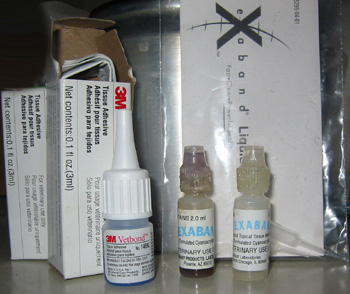 |
Skin glue: Must have if you’re introducing teenage boys! May only be used on dry wounds. May help to reduce infection resulting from battle wounds…that is, if you catch it right away. Also great if that one-in-a-million situation arises when your favorite rat gets nipped in the jugular. If not familiar with how to apply, have your Vet instruct you. |
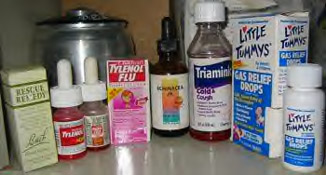 |
Everything else: Bach’s Rescue remedy, Tylenol (acetaminophen), Tylenol cold (with acetaminophen), Tylenol flu (with acetominophen), Echinacea, Triaminic cold and cough (rat’s don’t mind taking this one), Little Tummy’s for gas and bloat. Check the Rat Medication Guide regarding medications listed here and their use. |
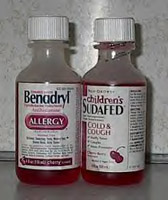 |
Benadryl and Sudafed for rhinitis symptoms (nasal congestion). |

